
Structure
Use a logical section order and readable text so extracted information remains understandable.
Use this complete ATS resume guide to connect parseable structure, job keywords, achievement evidence, file quality, and human readability into one application workflow.
Quick answer
A strong ATS resume balances four jobs: expose clean text, use predictable structure, speak the target job's language accurately, and give recruiters evidence they can evaluate. Optimize those layers in that order. Do not sacrifice credibility or readability to chase keyword density or a tool score.
What matters most
Use a logical section order and readable text so extracted information remains understandable.
Align skills and terminology with the exact posting, then prove important requirements in experience or projects.
Check both document extraction signals and the recruiter-facing PDF after every major tailoring pass.
Inside PortCV
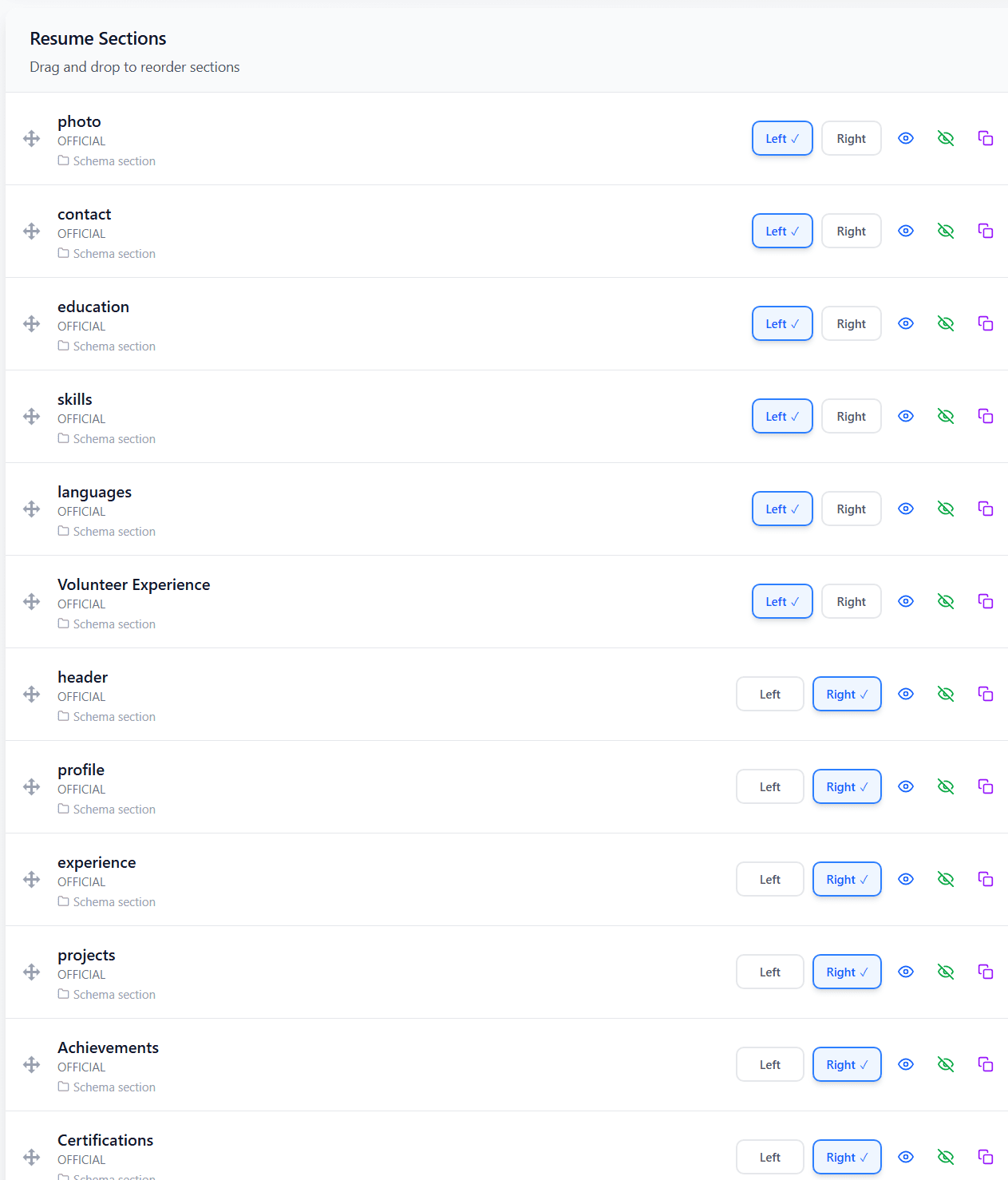
The PortCV resume engine brings the ATS workflow together: structured sections for clarity, keyword analysis for job language, ATS Match Score for comparison, Copilot for controlled edits, and template/export tools for presentation.
Open the resume engineGuide 01
Use a clear identity block followed by the sections appropriate to the role—often summary, experience, skills, education, and selected projects or certifications. Use consistent month/year dates and plain labels the profession recognizes.
Keep essential information in selectable text. Icons can be decorative, but email addresses, phone numbers, employers, and skill names should not exist only as images.
Guide 02
Extract hard skills, tools, certifications, responsibilities, and domain terms from the posting. Add the terms you genuinely match where the resume has proof. A skills list improves scanning; an experience bullet makes the skill credible.
Do not paste full job requirements, repeat phrases unnaturally, or add invisible keyword blocks. Optimization should improve communication rather than manipulate extraction.
Guide 03
Use a comparison tool to surface missing or weak alignment, then read every suggestion. Next inspect the resume like a recruiter: is the target obvious, does recent evidence lead, are bullets specific, and can the strongest claims be defended?
Finally test the exported file, link destinations, page breaks, and filename. The final artifact—not the editor preview—is what enters the hiring workflow.
Questions people ask
It uses the same career facts but places extra emphasis on predictable text extraction, job-relevant terminology, and conventional information structure.
Yes. There is no universal ATS one-page rule. Use the length required for relevant evidence while keeping the document readable.
Keep a strong base resume, then tailor meaningful requirements and terminology for specific jobs or closely related job families.
PortCV Resume Engine
Turn the guidance into a real resume in PortCV. Edit structured sections, refine wording with AI, check job alignment, switch layouts without rewriting your content, and export a polished PDF from one resume engine.