
Career stage
Students, experienced hires, career changers, and researchers need different evidence near the top.
Choose the right resume sections for your career stage, target role, qualifications, and available evidence instead of filling every block in a template by default.
Quick answer
Begin with contact information and the sections required to prove basic fit, then add optional sections only when they contribute relevant evidence. Students may prioritize education and projects; experienced professionals recent work; researchers publications; technical candidates projects and certifications; multilingual roles languages. Section choice should answer the target employer's questions faster.
What matters most
Students, experienced hires, career changers, and researchers need different evidence near the top.
A mandatory certification, portfolio, language, publication record, or project type can justify a dedicated section.
Do not keep a weak section merely to fill a template. Stronger evidence deserves the space.
Inside PortCV
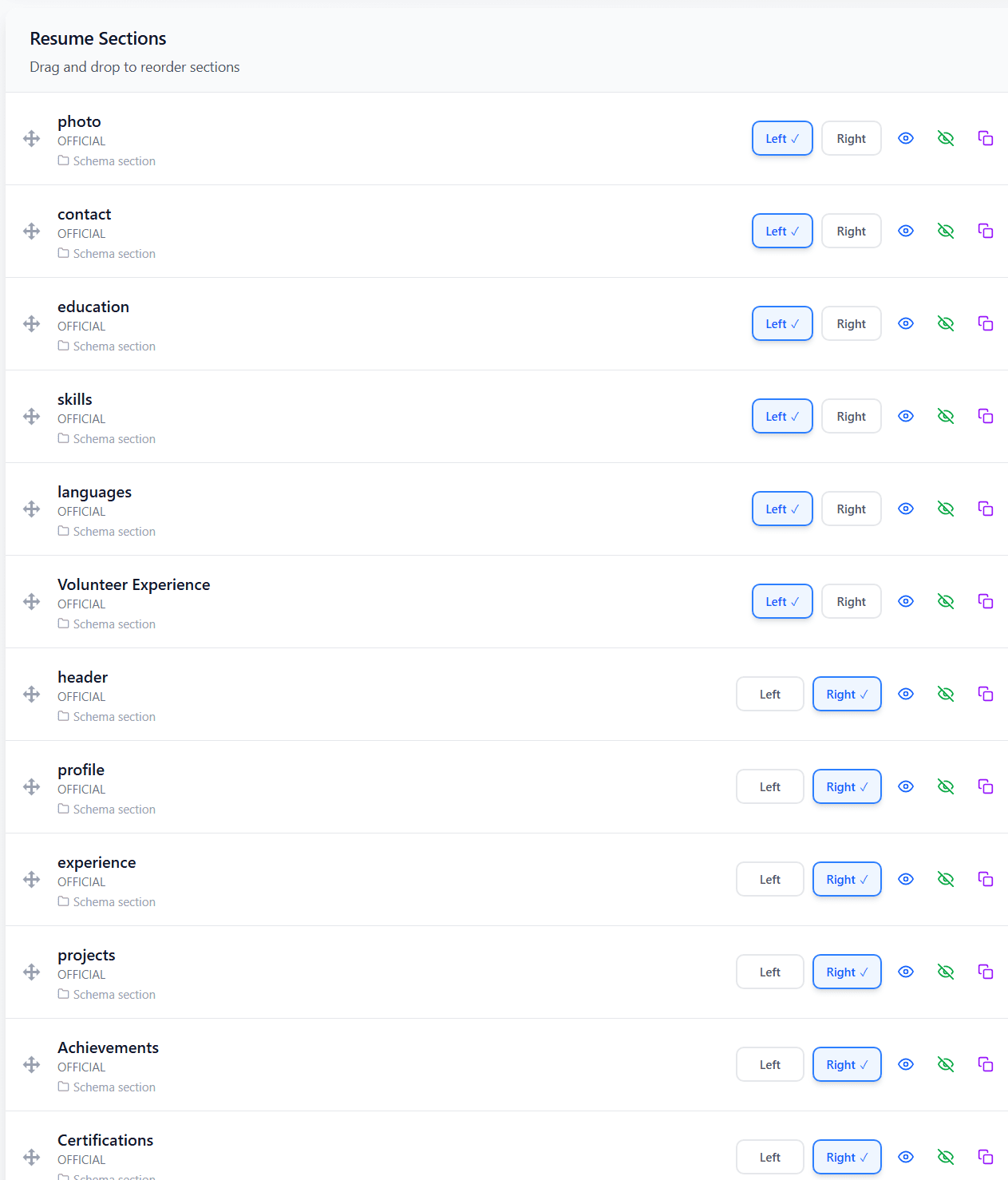
PortCV's section panel is designed for this decision. Add from a broad set of resume sections, reorder them for the current version, control visibility, and keep reusable content available when another application needs a different structure.
Open the resume engineGuide 01
A recruiter needs to identify you, understand relevant professional positioning, see credible experience or equivalent evidence, and verify key skills and education or qualifications. The exact core shifts by career context, but contact information and a coherent evidence path are non-negotiable.
A summary is optional; use it when it clarifies the story rather than repeating the first role.
Guide 02
Projects are valuable for technical, design, student, and career-change resumes. Certifications matter when the market values formal credentials. Languages belong when proficiency affects the work. Publications and conferences matter in research. Volunteering can demonstrate leadership or domain involvement.
A hobby section rarely outranks relevant experience, but it can add useful context in specific early-career, culture, or community-focused applications.
Guide 03
The template's default is only a starting point. Move the strongest target evidence closer to the top while preserving an understandable career story. Review the new layout at full-page scale because reordering affects page breaks and scanning rhythm.
Different targeted versions can legitimately use different section orders as long as the underlying facts remain consistent.
Questions people ask
Contact information is essential, and most job resumes need clear experience or equivalent evidence, skills, and education or qualifications. The exact set depends on the role and career stage.
Yes. A template should support your content, not force irrelevant categories into the application.
Students often place education, projects, internships, or relevant experience high depending on which provides the strongest evidence for the target role.
PortCV Resume Engine
Turn the guidance into a real resume in PortCV. Edit structured sections, refine wording with AI, check job alignment, switch layouts without rewriting your content, and export a polished PDF from one resume engine.