
Identity
Name and reliable contact information let the employer identify and reach you.
Understand the essential resume sections for most job applications and how header, experience, skills, education, and role-required qualifications work together.
Quick answer
There is no universal legal checklist for every resume, but most job applications need clear identity/contact details and enough structured evidence to evaluate relevant experience, skills, and education or qualifications. Add a summary only when it clarifies positioning, and make certifications prominent when the role requires them.
What matters most
Name and reliable contact information let the employer identify and reach you.
Experience, internships, projects, or comparable work show what you have actually done.
Skills, education, licenses, and mandatory certifications help verify baseline fit.
Inside PortCV
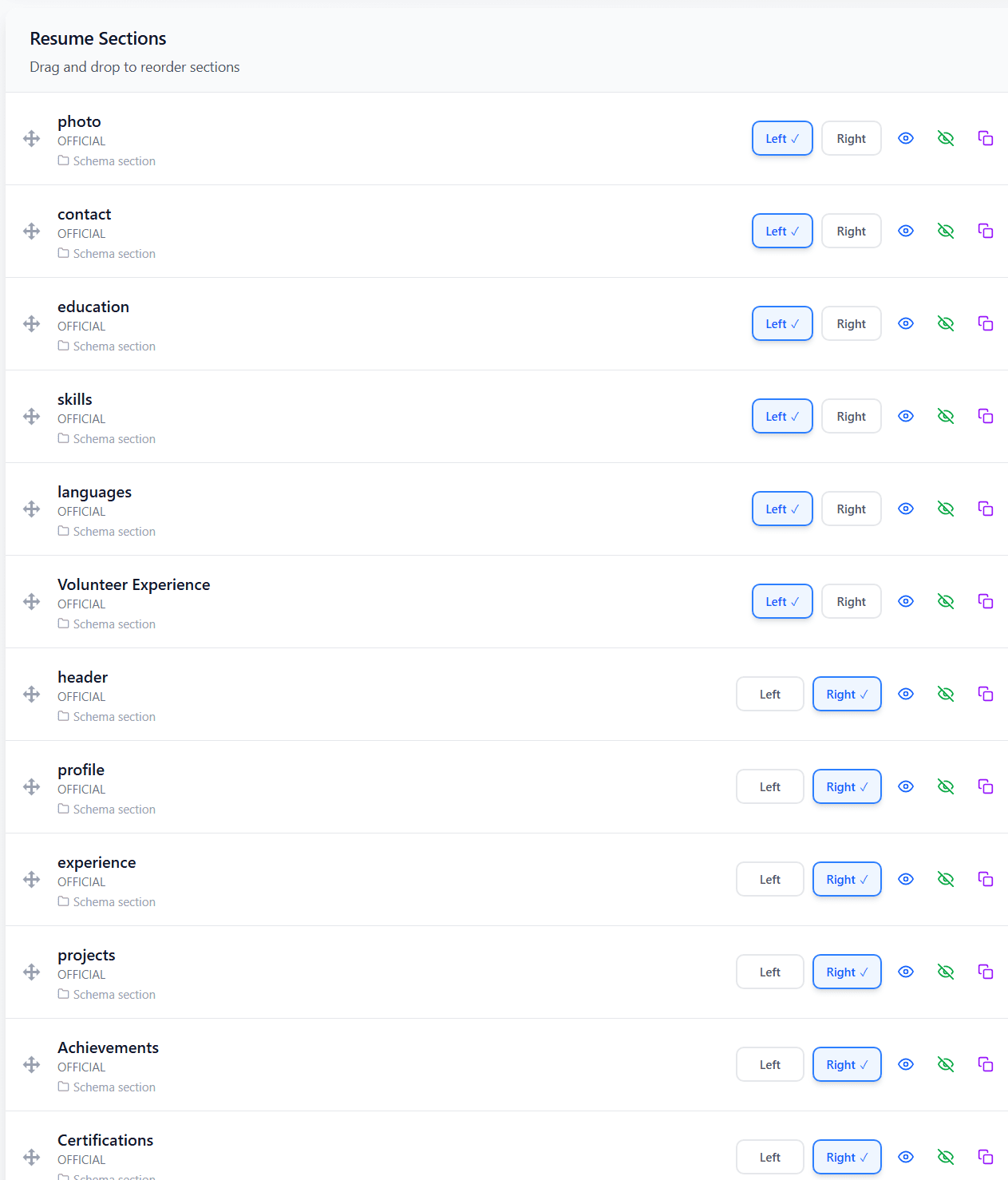
PortCV gives every core resume element a structured place while still letting students, career changers, researchers, and experienced professionals adjust which section carries the strongest evidence.
Open the resume engineGuide 01
Use your professional name, reliable email, phone, and location at an appropriate level. Add a target title or professional links when they improve evaluation. A full street address is usually unnecessary unless the application asks for it.
Guide 02
For experienced candidates this is usually work history. Students can use internships, projects, education, volunteering, or research. Career changers can surface transferable evidence. What matters is that the recruiter can see how your claimed capabilities were used.
Use dates and labels consistently so the career story is easy to follow.
Guide 03
Skills and education are common core sections, while licenses or certifications become effectively required when the job depends on them. Use the employer's recognized terminology accurately and do not hide a mandatory credential deep in optional content.
Once the core is solid, optional sections can add depth without distracting from essential evidence.
Questions people ask
No. Use one when it clarifies your professional direction or specialization; skip it when it would only repeat obvious information.
Most resumes include education or relevant training, but its position and detail depend on career stage and role requirements.
No. Projects become valuable when they provide important evidence not already demonstrated by work experience.
PortCV Resume Engine
Turn the guidance into a real resume in PortCV. Edit structured sections, refine wording with AI, check job alignment, switch layouts without rewriting your content, and export a polished PDF from one resume engine.