
Target
Choose a role or job family so you know which experience, skills, and projects deserve the most space.
Write a professional resume step by step: choose a target, select the right sections, turn experience into evidence, tailor keywords, review ATS readability, and export with confidence.
Quick answer
Start with the job direction, not the design. Gather accurate career facts, choose a format that fits your history, write recent relevant experience around evidence, add skills and education, tailor terminology to a real posting, then edit for clarity and export a readable PDF. Design comes after the resume says the right things.
What matters most
Choose a role or job family so you know which experience, skills, and projects deserve the most space.
Turn responsibilities into specific examples of work delivered, problems solved, decisions supported, and outcomes verified.
Use each posting to adjust emphasis and terminology without changing the facts of your history.
Inside PortCV
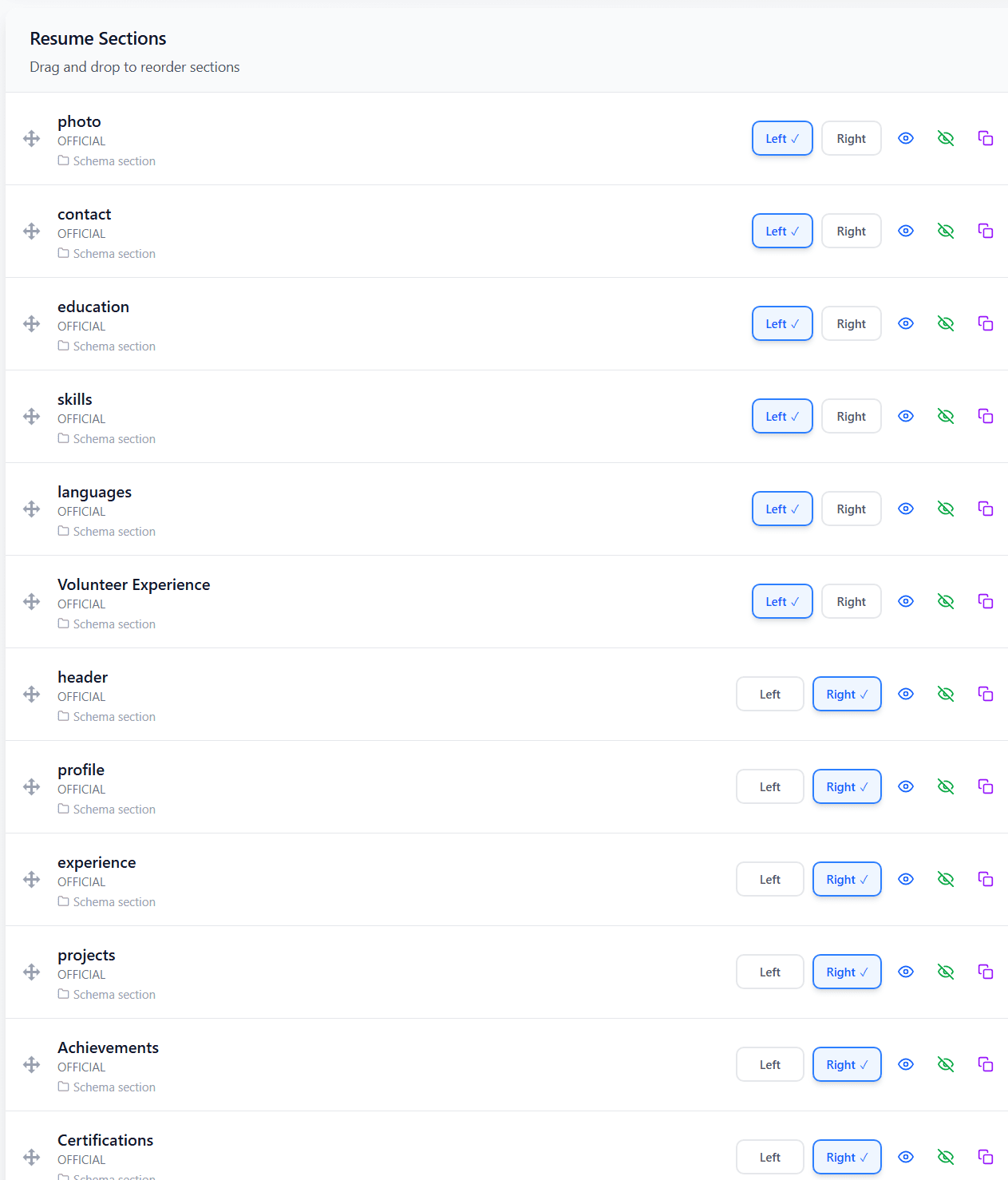
PortCV keeps resume content in structured sections, so you can build a verified base document, reorder information, use Copilot on selected text, compare with a job, change the visual template, and export without rebuilding your resume for every edit.
Open the resume engineGuide 01
List employers, job titles, dates, projects, responsibilities, tools, education, certifications, languages, and measurable outcomes you can verify. Capture more detail than the final resume needs; editing is easier when the source material is complete.
Choose the target role and review several relevant job descriptions. Note recurring requirements, but keep one exact posting available when you tailor the final version.
Guide 02
For many professionals, a clear header, concise summary, reverse-chronological experience, skills, and education form the core. Add projects, certifications, languages, publications, or volunteering when they strengthen the target story. Students can move education and projects higher; academics may need a CV-style structure instead.
Write experience bullets around concrete work. Use a reliable metric when it clarifies scope or impact, but do not manufacture percentages simply because a template suggests them.
Guide 03
Map important responsibilities and qualifications in the posting to evidence in your resume. Reorder bullets, surface relevant projects, and use familiar terminology where accurate. Remove or compress lower-value detail that competes with the target evidence.
Good professional resume writing is selective. It gives the target employer enough context to understand your contribution without turning every role into a biography. The most durable resume writing best practices are accuracy, relevance, specific evidence, consistent structure, and a final edit in the file format you will actually send.
Finish with two reviews: one for content and one for presentation. Check facts, grammar, dates, link destinations, reading order, page breaks, and the final filename.
Questions people ask
Include contact information and the sections that best prove fit for the target role—commonly summary, experience, skills, and education, plus relevant projects, certifications, languages, or other evidence.
Not always. Use one when a short positioning statement helps explain your specialization, level, or career direction. Skip it if it only repeats obvious information.
Gather and structure the core content first. A template then helps present that content without forcing important evidence into the wrong shape.
PortCV Resume Engine
Turn the guidance into a real resume in PortCV. Edit structured sections, refine wording with AI, check job alignment, switch layouts without rewriting your content, and export a polished PDF from one resume engine.