
Scholarship first
Research area, education, publications, grants, and presentations can receive more prominence than in a private-sector resume.
Create an academic resume or CV with the right depth for education, research, publications, teaching, grants, conferences, awards, and scholarly service while following the institution's application requirements.
Quick answer
An academic CV is usually cumulative and evidence-rich rather than restricted to one or two pages. Education, research, publications, teaching, presentations, awards, grants, service, and affiliations can all matter. An academic resume for non-faculty roles may be shorter and more targeted. Follow the institution's requested document type before applying generic resume rules.
What matters most
Research area, education, publications, grants, and presentations can receive more prominence than in a private-sector resume.
Courses taught, supervision, committees, peer review, and professional service may be decision-relevant evidence.
Use consistent citation styles and represent publication status accurately across published, in-press, preprint, or under-review work.
Inside PortCV
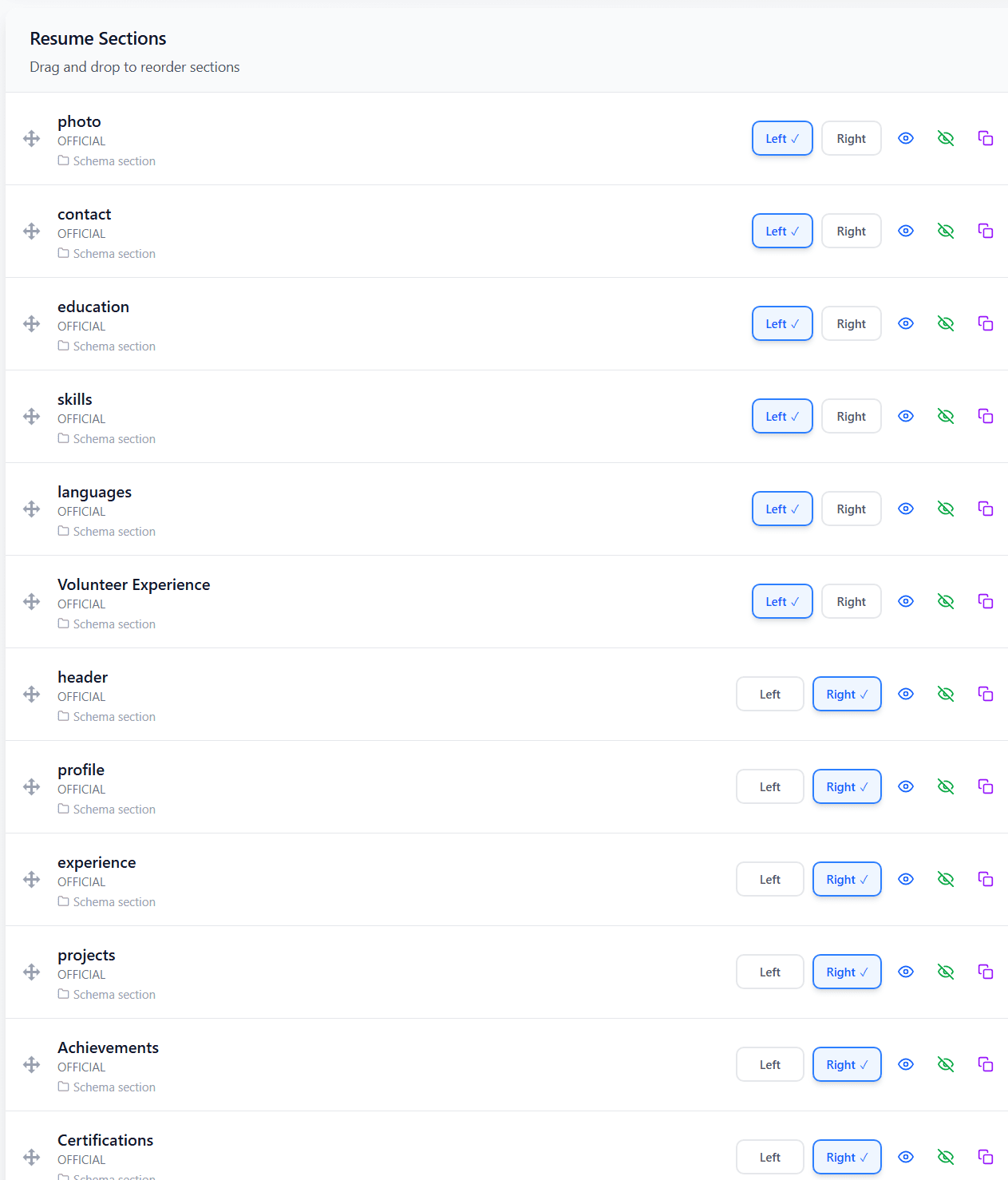
PortCV's resume engine supports publications, conferences, courses, certifications, workshops, education, projects, awards, volunteering, and other sections beyond a fixed corporate resume. Reorder them for an academic CV or hide detail for a shorter industry version.
Open the resume engineGuide 01
A curriculum vitae for academic hiring is commonly a comprehensive record that grows with the career. It can include research interests, education, appointments, publications, teaching, grants, talks, conferences, awards, supervision, service, and affiliations. A shorter academic or research resume may target an industry research role, grant opportunity, fellowship, or graduate application with more selective detail.
Because terminology differs by country and institution, always follow the document name and content instructions in the application.
Guide 02
A new PhD may lead with education and research; a faculty applicant can surface appointments, research, publications, teaching, and funding; an industry researcher may move technical skills and selected projects higher while compressing the full publication record.
Do not assume one academic hierarchy fits every discipline. Use field and institution conventions for citation style, author order, grant detail, and teaching evidence.
Guide 03
Preserve author order, venue names, dates, DOI links, and publication status. Do not label a manuscript under review as published or merge a conference abstract with a peer-reviewed article without clarification.
For grants and collaborative research, make your role understandable without taking sole credit for group outcomes. Accuracy and traceability matter more than dramatic language.
Questions people ask
There is no universal page limit. Length grows with relevant scholarly output, but the document should still be organized and free of repetition. Follow the institution's instructions.
Not always. In US academic contexts, a CV is typically comprehensive, while an academic or research resume may be shorter and targeted. Usage varies internationally.
Yes when scholarly output is relevant. Use complete, consistent citations and accurate publication status.
PortCV Resume Engine
Turn the guidance into a real resume in PortCV. Edit structured sections, refine wording with AI, check job alignment, switch layouts without rewriting your content, and export a polished PDF from one resume engine.