
Resume
Usually targeted and selective, emphasizing the experience and skills most relevant to a particular role.
Compare a CV and resume by purpose, length, content, market conventions, and career context. Learn when 'CV' means an academic record and when it is simply the local word for a resume.
Quick answer
In the United States, a resume is usually a concise, targeted job document while an academic CV is a comprehensive record of education, research, publications, teaching, presentations, awards, and service. In many countries, 'CV' is the normal term for the shorter job-application document. Always follow the employer's local meaning and requested content.
What matters most
Usually targeted and selective, emphasizing the experience and skills most relevant to a particular role.
Often comprehensive and cumulative, documenting scholarly, teaching, research, publication, and service history.
Outside the US, employers often say CV when they expect a document functionally similar to a resume.
Inside PortCV
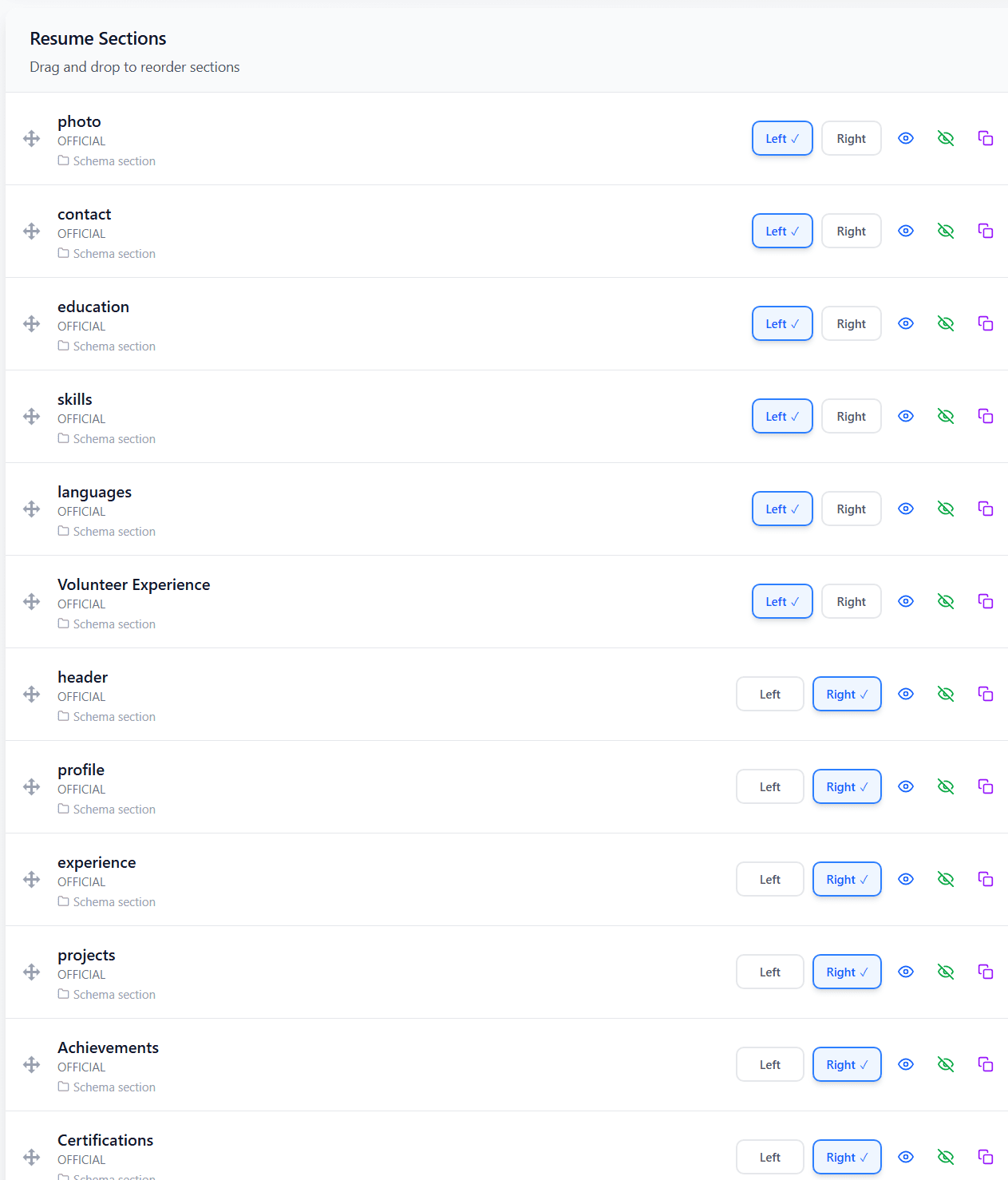
PortCV's structured section system supports more than one fixed resume shape. Reorder and add sections such as publications, conferences, certifications, projects, volunteering, and education so the document can reflect the application context rather than a universal template.
Open the resume engineGuide 01
A resume argues for fit with a job, which makes relevance and prioritization central. An academic CV documents the breadth of a scholarly career, so comprehensiveness and category detail can matter more than strict page count.
The labels are not globally standardized. A UK employer asking for a CV may expect a concise job application, not a US-style academic dossier.
Guide 02
A standard resume often prioritizes summary, experience, skills, education, and selected projects or certifications. An academic CV can include research interests, publications, teaching, grants, conferences, invited talks, awards, professional service, supervision, and affiliations.
Medical, scientific, federal, and international applications may have additional conventions. Follow authoritative instructions from the institution or employer.
Guide 03
A researcher moving into industry may keep a complete academic CV and a targeted two-page resume. The resume can summarize selected publications or research outcomes while the CV retains the complete scholarly record.
Using structured source data makes it easier to maintain both without creating conflicting dates and titles.
Questions people ask
An academic CV is often longer and cumulative, but in many countries the word CV refers to the same concise job document Americans call a resume.
Use the document the employer requests. Most US private-sector roles expect a targeted resume unless the field or posting specifically asks for a CV.
CV stands for curriculum vitae, a Latin phrase commonly translated as 'course of life.'
PortCV Resume Engine
Turn the guidance into a real resume in PortCV. Edit structured sections, refine wording with AI, check job alignment, switch layouts without rewriting your content, and export a polished PDF from one resume engine.