
One purpose
A section is easier to scan when the reader knows what kind of evidence belongs there.
Write resume sections with a clear purpose, from header and summary to experience, skills, education, projects, certifications, languages, publications, and optional career evidence.
Quick answer
Write each section for one decision. The header identifies you; the summary positions you; experience proves work; skills index capabilities; education and certifications verify training; projects show applied work; optional sections add evidence that the core document cannot. Remove or rename sections that do not help the target reader understand your qualifications.
What matters most
A section is easier to scan when the reader knows what kind of evidence belongs there.
Sections should not receive equal space. Expand the categories that prove fit and compress secondary background.
Use familiar heading names unless a custom label genuinely makes the content clearer.
Inside PortCV
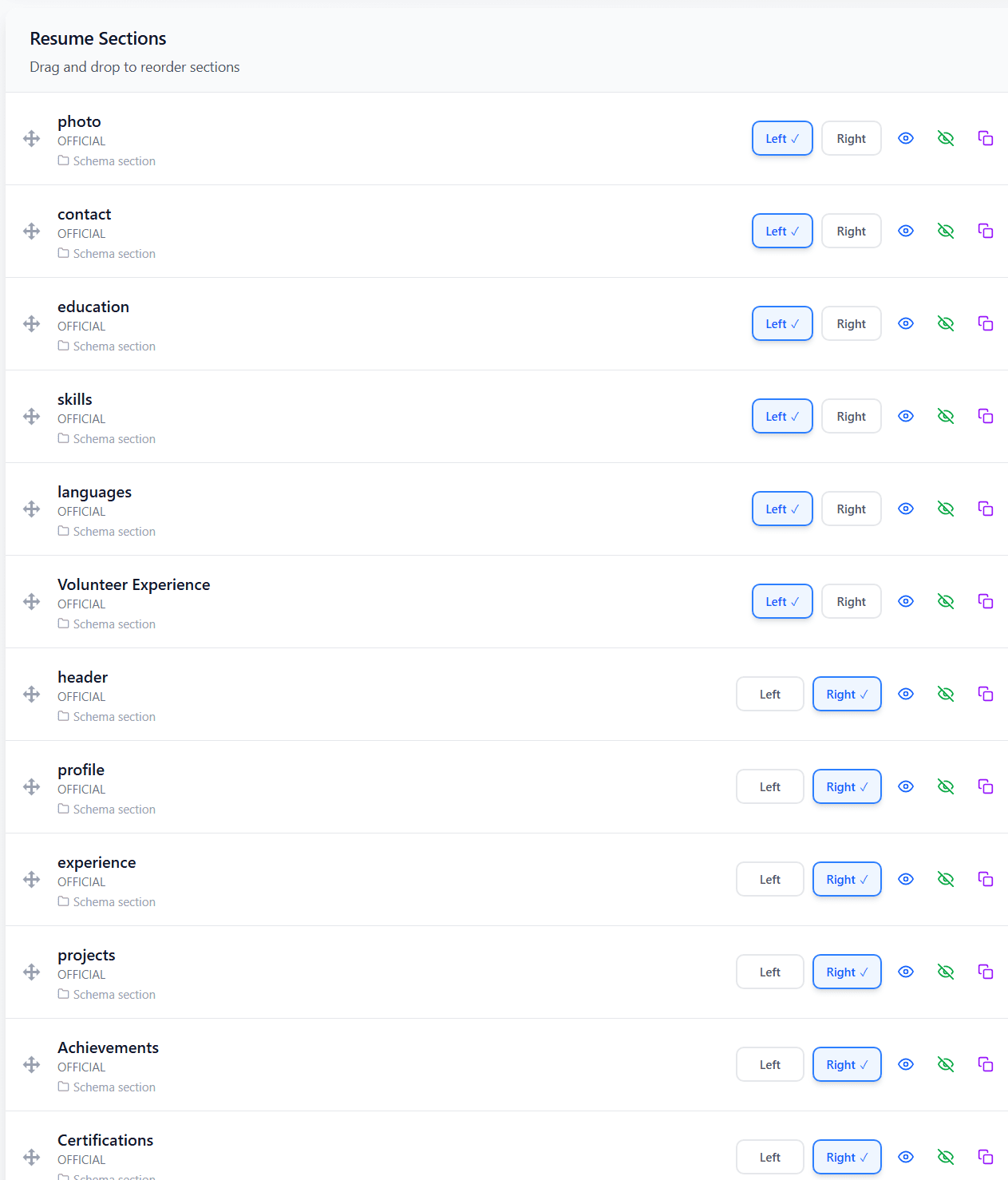
PortCV treats a resume as structured content rather than a fixed template. Add sections, reorder them, hide optional material for a variant, edit nested items, and then change the visual template without losing the semantic role of the content.
Open the resume engineGuide 01
The header answers who and how to contact you. A summary, when used, answers what professional direction and value you offer. Work experience answers what you have actually done. Skills answer which capabilities deserve quick scanning. Education answers relevant formal preparation.
Keep information in its natural home. Repeating the same skill in summary, skills, and three bullets without new context wastes space.
Guide 02
Projects can prove practical work when employment is limited. Certifications can verify required qualifications. Languages can matter in international or customer-facing roles. Publications, conferences, volunteering, awards, or courses can strengthen specialized applications.
Optional does not mean decorative. Include the section when it changes how a recruiter evaluates fit.
Guide 03
Experienced professionals often lead with summary and work history; students may move education and projects higher; researchers may prioritize education, research, and publications; career changers can surface a targeted summary and transferable projects before older unrelated detail.
The best order is the one that surfaces credible target evidence quickly while keeping chronology understandable.
Questions people ask
Common core sections are contact/header, summary when useful, work experience, skills, and education, with projects or certifications added when relevant.
Yes when the heading clearly describes useful evidence. PortCV supports structured and custom section arrangements rather than requiring one fixed list.
Not automatically. A highly relevant project, certification, or publication can appear earlier when it provides stronger evidence for the target role.
PortCV Resume Engine
Turn the guidance into a real resume in PortCV. Edit structured sections, refine wording with AI, check job alignment, switch layouts without rewriting your content, and export a polished PDF from one resume engine.