
Functional Resume FormatExamples, Structure & Templates
A functional resume focuses on your skills, abilities, and achievements rather than emphasizing your employment history. It helps candidates highlight relevant qualifications and transferable skills, making it useful for career changers and professionals with non-traditional career paths.
What Is a Functional Resume?
A functional resume is a resume format that emphasizes skills, abilities, and achievements rather than organizing the document primarily around employment history. Also known as a skills-based resume, this format allows candidates to group their qualifications into relevant skill categories and demonstrate what they can do without making the timeline of their career the main focus. A functional CV uses the same skills-first idea, but local CV conventions may require additional detail. Functional resumes can be useful for career changers, candidates with employment gaps, recent graduates, and professionals whose strongest qualifications come from a combination of work, projects, education, volunteering, or other experiences.
When to Use a Functional Resume
Career Changers
A functional resume for career change can emphasize transferable evidence when earlier job titles do not describe the work you are targeting now.
Skill-Focused Candidates
A strong option when your most relevant qualifications are specific skills, technical abilities, or achievements that can be demonstrated across different roles.
Non-Traditional Career Paths
Helpful for candidates whose experience comes from freelance work, projects, volunteering, education, or multiple short-term positions.
When to Avoid a Functional Resume
ATS-Heavy Applications
A chronological or combination resume may be safer when applying through an ATS because some systems and recruiters prefer a clear, traditional employment history.
Strong Career Progression
If you have a consistent career path with relevant positions and promotions, a chronological resume can showcase your professional growth more effectively.
Experienced Professionals
A functional format may hide valuable career achievements when your work history is already a major strength of your application.
Traditional Employers
Some employers and recruiters prefer seeing where and when you worked, making a traditional chronological structure easier to evaluate.
How to Write a Functional Resume
Follow these steps to build a skills-focused resume that highlights your strongest qualifications while keeping your career information clear.
Start with a Strong Summary
Introduce your professional identity, strongest capabilities, and the value you can bring to your target position.
Identify Your Most Relevant Skills
Choose several skill categories that closely match the requirements of the position you want to pursue.
Support Skills with Achievements
Include specific examples, projects, results, and accomplishments that demonstrate how you have successfully used each skill.
Add a Concise Work History
List your employers, job titles, and dates in a simple section so recruiters can still understand your professional background.
Use Relevant Keywords
Include terminology and skills from the job description to improve relevance and help your resume communicate your qualifications clearly.
Functional Resume Structure
A functional resume places skills and achievements near the top while keeping employment history concise and secondary to the candidate's qualifications.
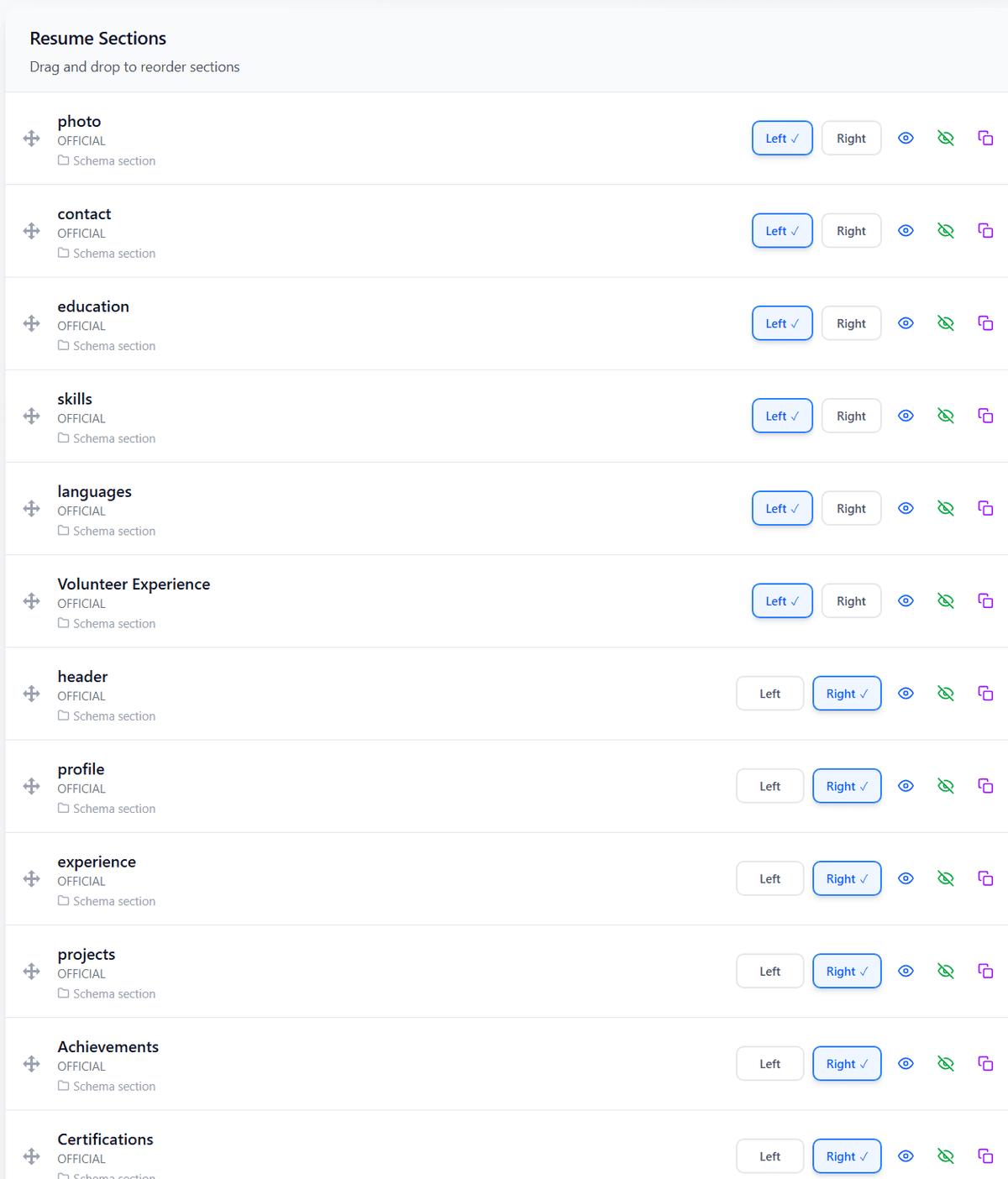
Section Order
Tips for Creating a Functional Resume
Focus on Relevant Skills
Choose skill categories that directly support the position you are applying for instead of listing every ability you have.
Prove Your Skills
Use specific achievements, results, projects, and measurable outcomes to show that your skills are backed by real experience.
Keep Work History Clear
Even though employment history is not the main focus, include accurate employers, job titles, and dates so recruiters can understand your background.
Functional vs Other Resume Formats
| Feature | Feature | Chronological | Functional | Combination |
|---|---|---|---|---|
| Best For | Experienced Professionals | Career Changers or Skill-Focused Candidates | Professionals Highlighting Skills + Experience | |
| Main Focus | Work History | Skills and Abilities | Skills + Work Experience | |
| Work History | Detailed | Brief | Detailed | |
| ATS Compatibility | Generally ATS-Friendly | Depends on Structure | Generally ATS-Friendly |
Frequently Asked Questions
1What is a functional resume format?
A functional resume is a skills-based resume format that emphasizes relevant skills, abilities, and achievements instead of making employment history the primary focus.
2Is a functional resume the same as a skills-based resume?
Yes. Functional resume and skills-based resume are commonly used to describe a format that organizes the resume around relevant skills and accomplishments rather than a detailed chronological work history.
3Who should use a functional resume?
Functional resumes can be useful for career changers, candidates with non-traditional experience, professionals with employment gaps, and candidates whose strongest qualifications are transferable skills.
4Are functional resumes ATS-friendly?
A functional resume can be ATS-readable, but it may be less effective than a chronological or combination resume for some ATS-driven applications because recruiters and systems often expect a clear employment timeline.
5What is the difference between a functional and chronological resume?
A functional resume focuses primarily on skills and achievements, while a chronological resume emphasizes professional experience and presents employment history in reverse chronological order.
6What is the difference between a functional and combination resume?
A functional resume places the strongest emphasis on skills and minimizes the role of employment history. A combination resume highlights skills while also providing a detailed reverse-chronological work history.
7Can a functional resume work for students or entry-level applicants?
A functional resume for students or a functional resume for entry level candidates can surface projects and transferable skills, but do not hide internships, part-time work, education, or dates that give employers useful context. A straightforward combination format is often easier to evaluate.
8What are the advantages and disadvantages of a functional resume?
The main functional resume advantage is control over which capabilities appear first. The main functional resume disadvantage is weaker career chronology; some recruiters may wonder where or when the highlighted skills were used. Support every skills group with concrete evidence and keep an honest work-history section.
9Do I need a functional resume template?
No. What matters is a readable skills based resume format with clear evidence, recognizable headings, and enough employment context for a recruiter to verify where those capabilities came from.
Still have questions? Contact our support team
All Resume Formats
Explore all resume formats supported by PortCV. Each format is designed for specific career situations and goals.
Chronological Resume Format
The most common format that highlights your work experience in reverse chronological order.
Functional Resume Format
Focuses on skills and achievements rather than employment history.
Combination Resume Format
Blends skills and professional experience for a balanced approach.
Academic Resume Format
Designed for students, researchers, and academics with emphasis on education and research.
Creative Resume Format
Allows for unique layouts and typography, perfect for designers and artists.
Google Docs Resume Format
Optimized for creating and editing resumes in Google Docs.
Build Your Resume for Free
Ready to Create Your Functional Resume?
Create a professional functional resume with PortCV. Highlight your strongest skills, showcase transferable qualifications, and present your experience with confidence.